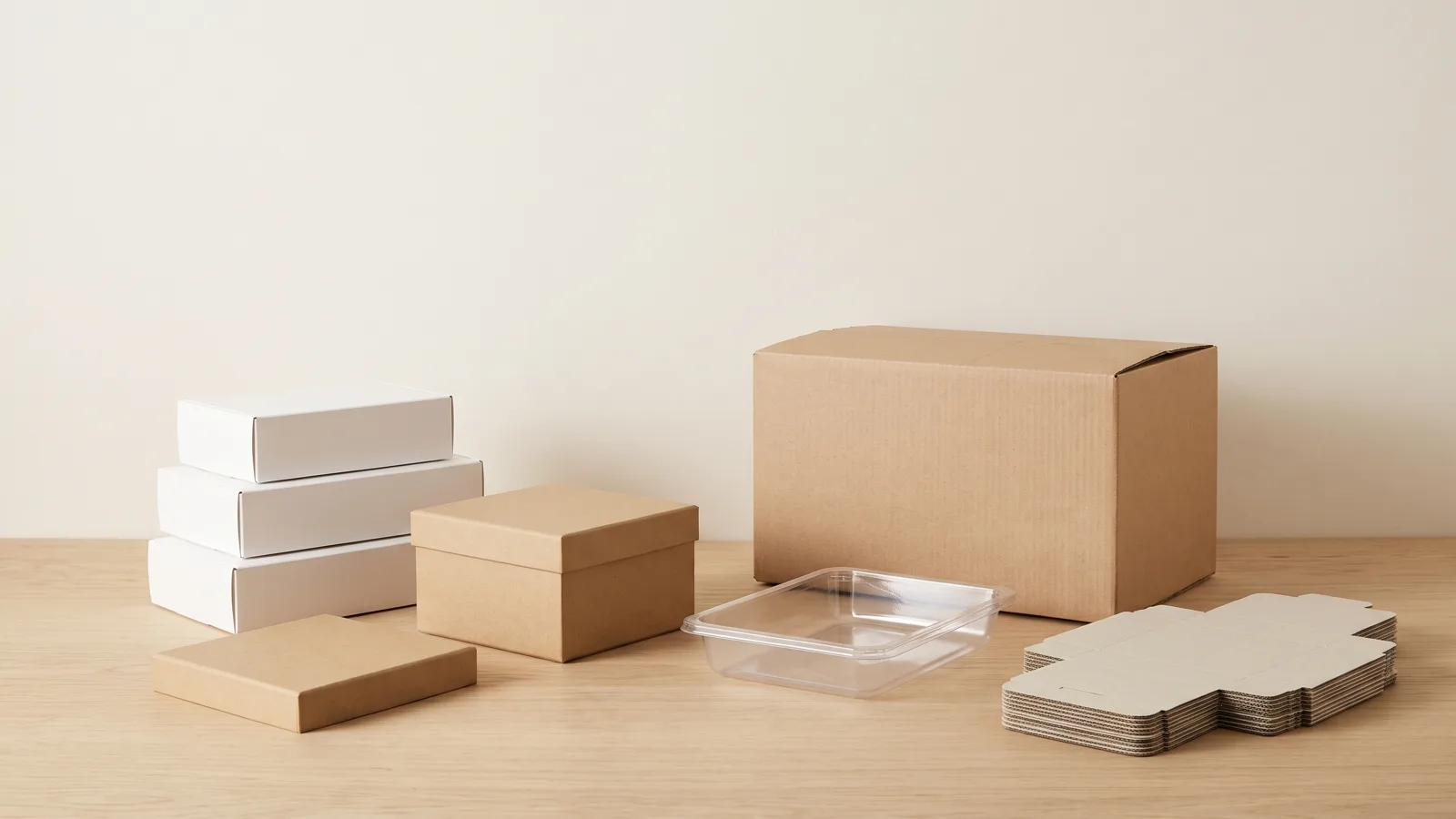
Under French EPR a packaging maker rarely declares the packaging it sells: the brand that packs its goods in it does. Under the EU Packaging Regulation it is the other way round: since 12 August 2026 every packaging type placed on the EU market needs a technical file and an EU declaration of conformity, and the packaging maker draws them up for packaging under its own name and for its micro-enterprise customers. From 1 January 2027 the pallets, film and cartons you deliver in are professional packaging in France.Sources (3) EUR-LexEUR-Lex — Regulation (EU) 2025/40 (PPWR)
 ADEMEADEME — Filière REP Emballages ménagers et papiers (EMPAP)ADEMEADEME — professional packaging (EPRO) scheme page
Two laws, two different producers
French EPR and the EU Packaging Regulation (PPWR) both talk about packaging, but they put the duty on different companies. Under French EPR the producer of household packaging is the business that packs its products, or has them packed, and the importer of packaged products ADEME. ADEME says the same for professional packaging: it is the business that packs the goods, not the packaging manufacturer ADEME. Under the PPWR the manufacturer of the packaging is whoever makes it, or has it designed or made, and markets it under its own name or trademark EUR-Lex.
So a box maker in Poland that sells plain shipping boxes to a French cosmetics brand declares nothing to Citeo for those boxes: the brand does. But if the boxes are sold under the box maker's own name, or the brand is a micro-enterprise, the conformity file for that box type is the box maker's. ADEME
| What you place on the French market | Stream or rule | Eco-organismes | Who declares | Status | Source |
|---|---|---|---|---|---|
| Empty packaging you make and sell to brands that fill it | No EPR stream | — | Your customer, the brand that packs its goods in it, declares it under French EPR; you do not | In force | — |
| Each packaging type you place on the EU market: technical file and EU declaration of conformity | EU Packaging Regulation (PPWR) | — | You, for packaging made under your own name or trademark, and for packaging you make for micro-enterprise customers (Art. 15(12)) | Since 12 August 2026 | EUR-Lex |
| Information your customers need for their own declarations: materials, weights, substances, recyclability | EU Packaging Regulation (PPWR) | — | You, as the supplier: it feeds their technical files and their EPR declarations | Since 12 August 2026 | EUR-Lex |
| Pallets, stretch film, cartons and big bags you use to deliver your packaging to French customers | Professional packaging (EPRO) | Citeo Pro, Léko Pro, Twiice | You, when you pack the delivery and place it on the French market | From 1 January 2027 | ADEME |
| Packaging you fill or pack yourself and sell to French consumers: gift boxes, branded jars, mailers | Household packaging and printed paper | Citeo, Léko, Adelphe | You, as the business that packs the product | In force | ADEME |
| Catalogues, sample books and leaflets sent to French customers | Household packaging and printed paper | Citeo, Léko, Adelphe | The company that issues them, when they reach end users producing household waste | In force | ADEME |
This table as data: JSON · CSV · CC BY 4.0, cite EPR France Rep
The micro-enterprise rule
Article 15(12) of the PPWR moves the manufacturer's duties from a micro-enterprise to its packaging supplier, where the supplier is established in the EU. A micro-enterprise has fewer than 10 employees and a turnover or balance sheet of at most €2 million. Most small brands are micro-enterprises: wineries, cosmetics start-ups, artisan food makers, Etsy and Shopify sellers. For a packaging maker with hundreds of small customers, that rule turns their packaging types into its own technical files. EUR-Lex
We met this first with wine crate and gift box makers: see wine packaging makers, where the rule is worked through on wooden crates and cartons.
What a declaration of conformity needs
Annex VII of the PPWR lists the technical documentation and Annex VIII the declaration itself EUR-Lex. For each packaging type, in practice:
- Identification: the packaging type, its materials, components and the products it is designed for.
- Substances: lead, cadmium, mercury and hexavalent chromium at most 100 mg/kg together in each component (Art. 5(4)), and for food-contact packaging the PFAS limits of Article 5(5).
- The requirements that already apply, and a record of which later ones (recyclability grade, recycled content, minimisation, labels) the packaging is being prepared for.
- Test reports and supplier statements behind each claim, kept for the time the regulation sets.
Sizes that share the same materials, construction and use rest on the same evidence. We do that work once per group and document the grouping in the technical file, so forty box sizes in the same board grade and print process are not forty separate research jobs.
A worked example
An illustration, not a client: a corrugated packaging maker in Portugal supplies French e-commerce brands. It sells 120 box references, 90 of them plain stock sizes and 30 printed for customers. Twenty of its French customers are micro-enterprises, and it delivers on about 3,000 pallets a year.
| Item | Rule | What it means |
|---|---|---|
| 90 stock boxes sold under the maker's name | PPWR, manufacturer | Grouped into, say, 6 types by board grade and print: 6 technical files and declarations of conformity |
| Printed boxes for 20 micro-enterprise customers | PPWR, Article 15(12) | The maker takes the manufacturer's duties for those types too |
| Printed boxes for larger customers | PPWR, the customer | The brand is the manufacturer; the maker supplies the data |
| All 120 boxes sold to French brands | French EPR | Declared by the brands; the maker sends weights and materials per reference |
| 3,000 pallets, stretch film, corner boards | Professional packaging, from 2027 | Declared by the maker as the business packing the delivery: wood from about €8 per tonne, plastics from about €259 per tonne |
At our published prices a declaration of conformity is €149 per type reviewed and €290 per type prepared by us; a packaging maker with dozens of types and hundreds of customer requests is quoted under Managed EPR instead, with the customer data service included.
The industry in France, in figures
French brands declare what they pack; packaging makers supply the data behind those declarations, and since August 2026 the conformity files for every packaging type.
| Figure | Value | Year | What it measures | Source |
|---|---|---|---|---|
| Plastic packaging industry in France: sales | €7.2bn | 2025 | Sales of plastic and flexible packaging makers, as presented by Elipso | Elipso slides at the COTREP |
| Plastic packaging makers | 320 | 2025 | Companies, with about 25,000 employees, as presented by Elipso | Elipso slides at the COTREP |
| Plastic packaging placed on the French market | 1.3 Mt | 2025 | Tonnes, as presented by Elipso (1.299 Mt) | Elipso slides at the COTREP |
| Packaging papers and boards produced in France | 4.6 Mt, €5.7bn | 2024 | Tonnes and sales of packaging grades, Copacel press kit | Copacel press kit, April 202 |
| Household packaging handled by Citeo | 5.4 Mt | 2025 | All materials, the market your customers declare |  Citeo annual report 2025 |
What comes after the declarations
- Harmonised sorting labels from 12 August 2028 at the earliest (Art. 12): your printed boxes carry them, your customers will ask for the artwork.
- Recyclability grades from 2030 at the earliest (Art. 6): grade C or better to stay on the market, measured per packaging type. Some formats are excluded, such as lightweight wood sales packaging (Art. 6(11)(g)).
- Minimisation from 1 January 2030 (Art. 10): weight and volume reduced to the minimum for the function, with documented performance criteria.
Each one starts as a question from a customer. Answering it once, per packaging type, and keeping the answer up to date is the service.
Where the work piles up
- Customer requests. Every brand's compliance team sends its own questionnaire: weights, materials, recycled content, substances, recyclability.
- Grouping packaging types. Deciding which references share a file, and documenting why.
- Your own suppliers. Board, resin, ink, adhesive and coating suppliers must give you the substance statements your declarations rely on.
- Your delivery packaging. Pallets, film and cartons to French customers join professional packaging on 1 January 2027, with its own eco-organisme and declaration. Sources (2)ADEMEADEME — professional packaging (EPRO) scheme pageADEMEADEME — which producers the EPR schemes cover
What Managed EPR does for you
With Managed EPR our team does the data work all year and you approve the result. For this industry that means:
- grouping your references into packaging types and drafting the technical file and declaration of conformity for each;
- collecting substance statements from your board, resin, ink and coating suppliers;
- answering your customers' compliance questionnaires from one data set per packaging type;
- declaring your own delivery packaging (pallets, film, cartons) to French customers as professional packaging from 2027; ADEME
- tracking the label, recyclability and minimisation dates for each type.
Every month we reconcile your French sales and list missing data; every quarter you get a forecast of your eco-contributions; before each declaration you approve the figures, and at year end you get the evidence pack behind each one. You keep your memberships and IDUs if you already have them: we take over from your declaration history under a written mandate.
If you are not established in France
Since 10 July 2026 a producer with no establishment in France must appoint a representative established in France by written mandate (article L. 541-10-9-1 of the Environmental Code)  Légifrance. It applies to EU and non-EU companies alike and has no minimum volume. The representative joins the eco-organismes in your name, obtains your IDUs and files your declarations: that is our core service, see what we do.
What it costs
Three ways to work with us, depending on how much of the work you want to hand over.
| Service | What we do | Price |
|---|---|---|
| Representative, Plus or Plus Pro | Up to three streams, up to 10 tonnes a year, with detailed reporting; Plus Pro when you also sell to businesses | €990 a year |
| Managed EPR | We run the data work, with a median saving of €1,071 a year in eco-contributions across our published clothing, footwear, electronics and furniture examples: monthly sales reconciliation, supplier follow-up, quarterly forecast, every declaration prepared for your approval, year-end evidence pack Sources (2)ADEMEADEME — Filière REP Textiles, linge, chaussures (TLC)ADEMEADEME — Filière REP Éléments d'ameublement (EA) | On quote, after a look at your data |
| PPWR | Readiness check of up to 25 packaging items; declaration of conformity and technical file per packaging type | €390 per company; €149 per type reviewed, €290 prepared by us |
Setup is €0. Eco-contributions are billed by the eco-organisme at its official rate and passed on with 0% markup. See pricing, Managed EPR and the PPWR readiness check. Sources (2)EUR-LexEUR-Lex — Regulation (EU) 2025/40 (PPWR)ADEMEADEME — which producers the EPR schemes cover
Frequently asked questions
Do we declare the boxes we sell to French brands to Citeo?
No. Under French EPR the business that packs its goods in the boxes declares them. You supply the weights and materials it needs.
Who signs the PPWR declaration of conformity for a printed box?
The manufacturer: the company under whose name or trademark the packaging is placed on the market, usually the brand. If the brand is a micro-enterprise and you are its EU supplier, you take on that role (Art. 15(12)).
Do forty box sizes mean forty times the work?
No. Sizes that share materials, construction and use rest on the same tests and supplier statements, so the evidence is gathered once per group and the grouping is documented in the technical file.
Are our delivery pallets packaging?
Yes. Pallets, stretch film, corner boards and cartons used to deliver your products to French businesses are professional packaging from 1 January 2027, declared by you. ADEME
We are outside the EU. Does Article 15(12) apply to us?
No. The rule moves the duties to a supplier established in the EU. A non-EU packaging maker's micro-enterprise customers stay the manufacturer, and usually ask you for the full data set.
Do recyclability grades apply now?
No, from 2030 at the earliest. The conformity file you draw up now should record which grade each type is designed for.

Razvan Toma is the founder of EPR France Rep, a France-established authorised representative (mandataire) for producers with no French establishment. He has worked in waste management and recycling since 2009, running circular economy programmes inside large B2B organisations in France for clients including Chanel, Microsoft, Decathlon, Pirelli, IKEA, Vinci, Capgemini and E.Leclerc.
Connect on LinkedIn →